- Home
- International Organizations
- AB-IO-2083
What Is the European Union? Members, Institutions and How It Works
What is the European Union? It is a political and economic union of 27 European countries that share a single market, common laws in many fields and shared institutions in Brussels, Strasbourg and Luxembourg. Twenty-one members also use the euro, and about 450 million people live under EU rules.
By World News Reddit Editorial Team11 min readSources named
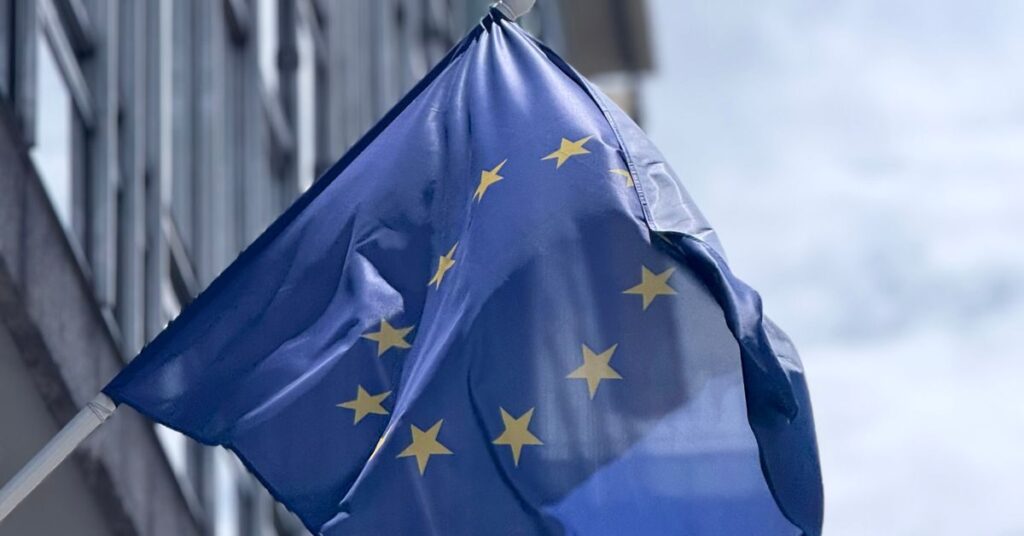
What is the European Union? It is a political and economic union of 27 European countries. They share a single market and common laws in many policy areas, and 21 of them also share one currency. About 450 million people live under its rules. Unlike a country, it has no army of its own and no single government. Unlike a classic alliance, its members have handed real lawmaking power to shared institutions in Brussels, Strasbourg and Luxembourg.
That mix is what makes the EU hard to explain. It is more than a trade club, yet less than a federal state, so asking what is the European Union rarely gets a one-line answer. This guide sets out who belongs, how the institutions work, what the EU can and cannot decide, and where enlargement stands in late 2026. Along the way it clears up the usual mix-ups with the eurozone, Schengen and Europe itself.
Key takeaways
- The EU has 27 member states. The United Kingdom left on 31 January 2020, and no country has joined since Croatia in 2013.
- Its core is the single market: goods, services, money and people move across borders without tariffs or border checks inside the bloc.
- Five main institutions share power: the European Commission, the European Parliament, the European Council, the Council of the EU and the Court of Justice.
- Not every member uses the euro (21 do) or sits in the Schengen Area (25 EU members do). Those are separate clubs with overlapping membership.
- Nine countries hold candidate status, and Kosovo is a potential candidate. Membership talks usually take a decade or more.
What is the European Union in simple terms?
Think of the EU as a rulebook plus a marketplace. Member states agree to follow common rules on trade, competition, food safety, consumer rights and much more. In return, businesses in all 27 countries gain access to one large market, and citizens gain the right to live, study and work in any member country.
A set of treaties forms the legal base. The most important are the Treaty on European Union and the Treaty on the Functioning of the European Union. The Lisbon Treaty, which took effect on 1 December 2009, shaped both. Every member state ratified them, so the EU can only act where the treaties give it power. That principle is called conferral, and it explains many arguments about what Brussels is allowed to do.
What is the European Union’s history? How it began
To see what is the European Union today, start with its origins. The story starts with coal and steel. In 1951, Belgium, France, Italy, Luxembourg, the Netherlands and West Germany signed the Treaty of Paris. It pooled their coal and steel industries under a common authority. The idea was practical and political at once. If nations shared the raw materials of war, another war between France and Germany would become much harder.
Next came the Treaties of Rome in 1957. They created the European Economic Community, a customs union with ambitions to build a common market. The Maastricht Treaty, in force since 1 November 1993, then created the European Union itself and set the path to the euro. Each step added policy areas, and each wave of new members added complexity.
| Year | Countries that joined | Members after |
|---|---|---|
| 1958 (founding) | Belgium, France, Germany, Italy, Luxembourg, Netherlands | 6 |
| 1973 | Denmark, Ireland, United Kingdom | 9 |
| 1981–1986 | Greece; Portugal and Spain | 12 |
| 1995 | Austria, Finland, Sweden | 15 |
| 2004 | Cyprus, Czechia, Estonia, Hungary, Latvia, Lithuania, Malta, Poland, Slovakia, Slovenia | 25 |
| 2007 | Bulgaria, Romania | 27 |
| 2013 | Croatia | 28 |
| 2020 | United Kingdom leaves | 27 |
Which countries are in the European Union?
Twenty-seven countries belong today. The table below shows when each joined, whether it uses the euro and whether it is part of the Schengen Area. Bulgaria became the 21st euro country on 1 January 2026, according to the European Central Bank. Six members therefore keep their own currency: Czechia, Denmark, Hungary, Poland, Romania and Sweden.
| Country | Joined | Uses the euro | In Schengen |
|---|---|---|---|
| Austria | 1995 | Yes | Yes |
| Belgium | 1958 | Yes | Yes |
| Bulgaria | 2007 | Yes (2026) | Yes (2025) |
| Croatia | 2013 | Yes (2023) | Yes (2023) |
| Cyprus | 2004 | Yes (2008) | No |
| Czechia | 2004 | No | Yes |
| Denmark | 1973 | No | Yes |
| Estonia | 2004 | Yes (2011) | Yes |
| Finland | 1995 | Yes | Yes |
| France | 1958 | Yes | Yes |
| Germany | 1958 | Yes | Yes |
| Greece | 1981 | Yes | Yes |
| Hungary | 2004 | No | Yes |
| Ireland | 1973 | Yes | No |
| Italy | 1958 | Yes | Yes |
| Latvia | 2004 | Yes (2014) | Yes |
| Lithuania | 2004 | Yes (2015) | Yes |
| Luxembourg | 1958 | Yes | Yes |
| Malta | 2004 | Yes (2008) | Yes |
| Netherlands | 1958 | Yes | Yes |
| Poland | 2004 | No | Yes |
| Portugal | 1986 | Yes | Yes |
| Romania | 2007 | No | Yes (2025) |
| Slovakia | 2004 | Yes (2009) | Yes |
| Slovenia | 2004 | Yes (2007) | Yes |
| Spain | 1986 | Yes | Yes |
| Sweden | 1995 | No | Yes |
Check this list against official sources before relying on it for legal or travel decisions. Membership changes rarely, but euro and Schengen status can move. You can also test yourself on the map with our countries of the world quiz.
What is the European Union’s structure? The main institutions
Power in the EU is shared on purpose. No single body can pass a law alone, which slows decisions but forces compromise between large and small states, and between governments and voters.
| Institution | Who sits in it | Main job | Base |
|---|---|---|---|
| European Commission | One commissioner per member state, led by a President (Ursula von der Leyen since 2019) | Proposes laws, enforces EU rules, runs the budget | Brussels |
| European Parliament | 720 members elected directly by voters every five years | Co-decides most laws and the budget; scrutinises the Commission | Strasbourg and Brussels |
| European Council | Heads of state or government, plus its President (António Costa since December 2024) | Sets the overall political direction | Brussels |
| Council of the EU | Ministers from each national government, by policy area | Co-decides laws with Parliament; coordinates national policy | Brussels and Luxembourg |
| Court of Justice of the EU | Judges from each member state | Interprets EU law and settles disputes between institutions and states | Luxembourg |
| European Central Bank | Governing Council of euro-area central bank governors and an executive board | Sets euro-area interest rates and watches price stability | Frankfurt |
How an EU law is made
Most legislation follows the ordinary legislative procedure. The path looks like this:
- The Commission drafts a proposal. It is the only body that can start most laws.
- The European Parliament and the Council of the EU each review and amend the text.
- If they disagree, negotiators meet in informal talks called trilogues to find a compromise.
- Both bodies must approve the final text. Then it becomes a regulation (applies directly) or a directive (member states write it into national law).
This is why EU policy often feels slow. A single file can take two years from proposal to adoption, and national governments then need further time to apply directives. In contrast, regulations such as the data-protection rules known as GDPR bite immediately in all 27 countries.
What is the European Union responsible for?
The treaties divide power into three buckets. The split matters because it decides who can legislate: Brussels, national capitals or both.
| Type of power | What it means | Examples |
|---|---|---|
| Exclusive EU competence | Only the EU can legislate | Customs union, competition rules for the single market, euro-area monetary policy, common trade policy |
| Shared competence | Both the EU and member states can act; states act where the EU has not | Internal market, transport, energy, environment, consumer protection, agriculture |
| Supporting competence | The EU helps and coordinates; states keep control | Health, education, culture, tourism, civil protection |
Defence and foreign policy sit mostly with national governments. The EU has a High Representative for foreign affairs, currently Kaja Kallas, and it can agree sanctions, but it needs unanimity among all 27 for most foreign-policy decisions. Meanwhile, taxation also still requires unanimity, which is why tax harmonisation moves slowly.
The single market and the four freedoms
The single market is the EU’s signature achievement. It rests on four freedoms: the free movement of goods, services, capital and people. In practice, a French bakery can sell to Poland without customs paperwork. A Spanish nurse can work in Ireland with a recognised qualification, and a Dutch investor can buy shares in Italy. The bloc’s economy produces roughly €18 trillion a year. That makes it one of the three largest economic areas in the world, alongside the United States and China.
How the EU is funded
The EU budget is small compared with national budgets, at about 1% of the bloc’s gross national income in a typical year. It comes from customs duties, a share of VAT, contributions based on national income and a few newer own resources. The seven-year framework for 2021–2027 is worth around €1.2 trillion, with a further €750 billion pandemic recovery fund, NextGenerationEU, financed by joint borrowing. Most spending goes to farm support and to regional development in poorer areas.
European Union vs eurozone vs Schengen: what is the difference?
Most confusion about the EU comes from five overlapping labels. They do not share the same membership.
| Name | What it is | Members (2026) | Notable outsiders or extras |
|---|---|---|---|
| European Union | Political and economic union | 27 | — |
| Eurozone (euro area) | Countries that use the euro | 21 | Six EU members still use national currencies |
| Schengen Area | Passport-free travel zone | 29 | Includes Iceland, Liechtenstein, Norway and Switzerland; excludes Ireland and Cyprus |
| European Economic Area | EU single market extended to three non-EU states | 30 | Iceland, Liechtenstein and Norway take part without being EU members |
| Council of Europe | Human-rights organisation (not an EU body) | 46 | Runs the European Court of Human Rights; includes the UK, Türkiye and Ukraine |
Switzerland shows how the pieces fit. It is not in the EU or the EEA, yet it is in Schengen and trades with the bloc through a web of bilateral deals. The same logic explains why the UK, after Brexit, is neither in the single market nor in Schengen (it never joined Schengen anyway).
Who wants to join? Candidate countries and enlargement
Anyone asking what is the European Union in 2026 should also know it is still growing. Ten countries are in the accession process. Nine have candidate status: Albania, Bosnia and Herzegovina, Georgia, Moldova, Montenegro, North Macedonia, Serbia, Türkiye and Ukraine. Kosovo has applied and is treated as a potential candidate. The European Commission lists the Copenhagen criteria as the entry test: stable democratic institutions, a functioning market economy and the ability to take on all EU law.
Negotiations run through 35 policy chapters, and every member state must agree at each major step. In July 2026, the Associated Press reported that four candidates moved forward in one of the bloc’s biggest enlargement steps in more than 20 years. The European Commission has also indicated that Montenegro could sign an accession treaty in 2027, which would then need ratification by all 27 members. Even so, timelines slip. Georgia’s process, for example, has been effectively stalled since 2024.
Common criticisms and defences of the EU
The EU draws strong views from both directions, and it helps to know the strongest version of each.
- Critics point to the democratic deficit: voters do not elect the Commission directly, and national governments can be outvoted in the Council on many topics. They also argue that regulation burdens small firms and that the euro cut countries off from currency devaluation as a way to adjust.
- Defenders reply that the Parliament is elected, that national ministers sit in the Council, and that the single market made members richer. They credit the bloc with decades of peace among former rivals and with greater bargaining power in trade talks.
- Both sides agree that decision-making by unanimity in foreign policy and tax can block action, and that enlargement raises hard questions about reforming the voting rules.
Frequently asked questions about the European Union
What is the European Union in one sentence?
The European Union is a union of 27 European countries with a single market, shared laws in many fields and joint institutions. Twenty-one of them also use the euro.
How many countries are in the European Union?
There are 27 member states. The United Kingdom left on 31 January 2020, and Croatia was the last country to join, in 2013.
Is the UK in the European Union?
No. The United Kingdom left the EU on 31 January 2020. It is outside the single market and customs union, though it trades with the bloc under a post-Brexit agreement.
Is Switzerland or Norway in the EU?
Neither is a member. Norway belongs to the European Economic Area, which gives it access to the single market. Switzerland trades through bilateral treaties and belongs to Schengen.
What is the difference between the EU and the eurozone?
The EU is the political and economic union of 27 states. The eurozone is the smaller group of 21 EU members that use the euro as their currency.
Who runs the European Union?
No single leader does. The Commission proposes laws, the Parliament and the Council adopt them, the European Council sets direction and the Court of Justice interprets the rules.
Can a country leave the EU?
Yes. Article 50 of the Treaty on European Union sets out the process. The United Kingdom is the only state to use it, and its withdrawal took effect after almost four years of talks.
What is the European Union’s motto?
The EU’s motto is “United in diversity”. It was adopted in 2000 and expresses the idea that Europeans come together while keeping their many cultures and languages.
So, what is the European Union today?
The short answer to what is the European Union is a rule-making club of 27 states, not a country. Knowing that helps you read the news with less confusion. A story about “Brussels” may concern the Commission, the Council or a national government acting through the Council. A story about “Europe” may concern the EU, the eurozone or Schengen, which are three different clubs.
Watch three things over the next few years. First, how fast enlargement moves. Second, how far the 2026 energy price shock tests the single market. Third, whether defence spending shifts more power to the EU level. For related explainers, browse our International Organizations guides. Check the world affairs glossary for unfamiliar terms, see why Nordic EU members top the happiest countries ranking, or read how an energy shock can tip economies into stagflation. The World News Reddit homepage lists every topic.