- Home
- Climate & Energy Policy
- AB-CE-2091
What Is ESG? A Plain-English Guide to Environmental, Social and Governance Policy
What is ESG? ESG stands for environmental, social and governance, a framework investors, regulators and companies use to judge how a business manages climate risk, treats people and runs itself. Rules and ratings vary widely by country, and the EU narrowed its reporting law in 2026.
By World News Reddit Editorial Team7 min readSources named
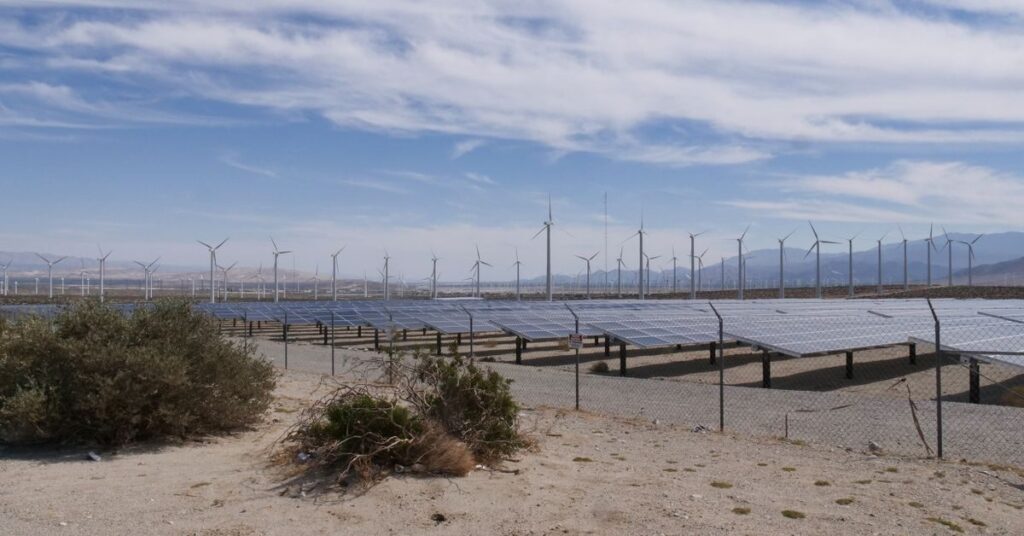
What is ESG? ESG stands for environmental, social and governance. It is a framework that investors, regulators and companies use to judge how a business handles climate and resource risks. It also covers the treatment of workers and communities and the quality of leadership and controls. The aim is to capture risks and opportunities that a standard balance sheet does not show.
Asking what is ESG now draws political answers as well as financial ones. The European Union has cut back its sustainability reporting rules. The United States is moving to rescind a federal climate disclosure rule, and some US states have passed laws against ESG investing. This plain-English guide explains what ESG means, how scores are built, which rules apply in 2026 and where the real criticisms lie.
Key takeaways
- ESG groups company performance into three pillars: environmental, social and governance.
- A 2004 UN Global Compact report titled Who Cares Wins popularised the term. The UN-backed Principles for Responsible Investment followed in 2006.
- Rules differ by region. The EU adopted a scaled-back reporting regime in 2026. The US federal climate rule is stayed and heading for rescission, while California has its own laws.
- ESG ratings are not standardised. Different agencies often disagree about the same company.
- ESG is a risk-and-disclosure tool. It is not the same as charity, ethics screening or guaranteed higher returns.
What is ESG? The three pillars explained
Each letter covers a different set of questions. Together they describe how a company manages the issues that could hurt its business or its stakeholders over the long run.
| Pillar | What it covers | Typical metrics | Example of a risk |
|---|---|---|---|
| Environmental (E) | Impact on and exposure to nature and climate | Greenhouse gas emissions (Scopes 1, 2 and 3), energy use, water use, waste, deforestation | A utility with large coal assets faces carbon costs and stranded assets |
| Social (S) | Relations with employees, customers, suppliers and communities | Workplace safety rates, pay equity, turnover, supply-chain labour standards, data privacy | A retailer with abusive suppliers faces boycotts and legal action |
| Governance (G) | How the company is run and controlled | Board independence, executive pay, shareholder rights, audit quality, anti-corruption policies | A founder-controlled firm with weak audit oversight hides losses |
The emissions metrics deserve a short note. Scope 1 covers direct emissions from a firm’s own sites and vehicles. Next, Scope 2 covers purchased electricity and heat. Finally, Scope 3 covers everything else in the value chain, from suppliers to customers, and is usually the largest and hardest to measure.
What is ESG’s history? A short timeline
Responsible investing is older than the label. Faith groups avoided “sin stocks” for centuries, and anti-apartheid campaigns in the 1980s pushed funds to sell holdings in South Africa. The modern term arrived in 2004. A UN Global Compact report, Who Cares Wins, urged financial firms to weave environmental, social and governance issues into analysis. The Principles for Responsible Investment launched in 2006, and ESG integration spread through asset management in the 2010s, speeding up after the 2015 Paris Agreement.
How do ESG ratings and scores work?
Agencies collect company disclosures, news and sometimes survey data. They then weight issues they judge to be material for that industry and produce a score. Methods differ, so the same company can look good under one rater and mediocre under another.
| Provider type | Scale | What it tries to measure |
|---|---|---|
| MSCI ESG Ratings | AAA (leader) to CCC (laggard) | Exposure to industry-specific ESG risks and how well the firm manages them |
| Sustainalytics (Morningstar) | Risk score from 0 to 40+, grouped as negligible, low, medium, high or severe | Unmanaged ESG risk that could affect firm value |
| S&P Global ESG Scores | 0 to 100 | Performance against a questionnaire-based assessment |
| ISS ESG | Decile and letter grades | Company and country sustainability performance |
A widely cited 2022 academic study by Florian Berg, Julian Kölbel and Roberto Rigobon found that correlations between six major ESG raters averaged around 0.54. By comparison, credit ratings from the major agencies correlate at about 0.99. In other words, raters often disagree, which is why careful investors read the underlying data and not just the headline grade.
ESG regulation in 2026: where the rules stand
Regulation is changing quickly, and it differs sharply by jurisdiction. Here is a snapshot based on law-firm and regulator updates published through mid-2026.
| Region | Rule | Status in 2026 |
|---|---|---|
| European Union | Corporate Sustainability Reporting Directive (CSRD) | Narrowed by the Omnibus Directive, adopted on 24 February 2026 and in force from 18 March 2026. One compliance guide estimates that roughly 85–90% fewer companies face mandatory reporting. |
| European Union | Corporate Sustainability Due Diligence Directive (CSDDD) | Scope cut back; the duty to adopt a climate transition plan was removed. |
| European Union | Sustainable Finance Disclosure Regulation (SFDR) and EU Taxonomy | Still in force; the Commission simplified Taxonomy reporting through a 2026 delegated act. |
| United States (federal) | SEC climate disclosure rule, adopted March 2024 | Stayed during litigation. The SEC stopped defending it in March 2025 and has proposed to rescind it; rescission was not final as of mid-2026. |
| United States (California) | SB 253 and SB 261 | The California Air Resources Board approved implementing regulations on 26 February 2026. Large companies doing business in the state must report emissions and climate risk. |
| Global | ISSB standards (IFRS S1 and S2) | Voluntary baseline adopted or considered by dozens of jurisdictions. |
Overall, the picture is mixed. Brussels has narrowed who must report but kept the framework. Washington has stepped back, yet California and many multinational firms still collect climate data to meet other countries’ rules. Companies that operate globally often follow the strictest regime anyway. For the energy price backdrop that shapes this debate, read our guide to stagflation and energy shocks.
Is ESG investing worth it? Arguments for and against
The case for ESG
- Risk management: climate, labour and governance failures can destroy value quickly, from oil spills to accounting scandals.
- Better information: disclosure forces firms to measure things they ignored before, such as emissions.
- Capital allocation: investors can steer money to firms with credible transition plans.
The case against ESG
- Inconsistent ratings: as the study above shows, raters disagree, so scores can mislead.
- Greenwashing: firms and funds can overstate sustainability claims. Regulators in the EU, UK and US have fined managers for misleading labels.
- Mixed performance: research finds no reliable return advantage or penalty that holds across all periods and markets.
- Political backlash: some US states restrict public funds from using ESG criteria, and critics argue it distracts managers from maximising returns.
Both camps contain serious arguments. The most defensible view is that ESG data is useful for judging risk, provided you know who made the score and how.
ESG vs CSR vs impact investing: what is the difference?
Several terms are mixed up with ESG, so it helps to separate what is ESG from its neighbours.
| Concept | Main focus | Who drives it | Measured by |
|---|---|---|---|
| ESG | Material risks and disclosure | Investors, regulators, rating agencies | Standardised metrics and scores |
| Corporate social responsibility (CSR) | A company’s voluntary good-citizen activities | The company itself | Reports, donations, programmes |
| Socially responsible investing (SRI) | Excluding industries that clash with values | Individual or faith-based investors | Exclusion lists |
| Impact investing | Measurable social or environmental outcomes alongside returns | Specialist funds and development banks | Impact targets and reporting |
Frequently asked questions about ESG
What is ESG in simple terms?
ESG means environmental, social and governance. It is a way to assess how a company handles climate and resource risks, treats people and runs itself, so investors can judge long-term risks.
What does ESG stand for?
Environmental, social and governance. The three words describe the three groups of issues that rating agencies and regulators examine.
Who created ESG?
The term appeared in the 2004 UN Global Compact report Who Cares Wins, and the UN-supported Principles for Responsible Investment, launched in 2006, spread the idea in finance.
Is ESG mandatory?
It depends on where a company operates. The EU requires sustainability reporting for in-scope companies, California requires emissions and climate-risk reports from large firms, and the US federal rule is stayed.
What is greenwashing?
Greenwashing means overstating or faking environmental credentials in marketing or fund labels. Regulators are increasingly fining firms that make misleading claims.
Does ESG investing give lower returns?
Evidence is mixed. Studies find no consistent return advantage or penalty across all markets and periods, so results depend on the funds, years and methods used.
What is the difference between ESG and sustainability?
Sustainability is the broad goal of meeting needs without harming the future. ESG is the measurement framework investors and companies use to track progress and risk.
What is ESG telling companies and readers in 2026?
So what is ESG, finally? A reporting and risk framework. Knowing that helps you cut through slogans on both sides. It is not a moral guarantee, and it is not a conspiracy. It is a reporting and risk framework. Its rules now vary by region, with the EU simplifying and the US federal government rolling back.
If you invest, check which methodology a fund uses and read its holdings. If you run a company, map which regimes apply to you before choosing standards. To learn more about the institutions behind sustainability rules, read what the European Union is and how it makes laws. Explore more in the Climate and Energy Policy section, look up terms in the glossary or head back to the homepage.