- Home
- Geopolitics Concepts
- AB-GC-2085
What Is a Coup? Definition, Types and Famous Examples
What is a coup? A coup, or coup d'état, is an illegal and overt attempt by the military or other insiders within the state to remove a sitting government and seize control. Researchers count a coup as successful when the plotters hold power for at least seven days.
By World News Reddit Editorial Team8 min readSources named
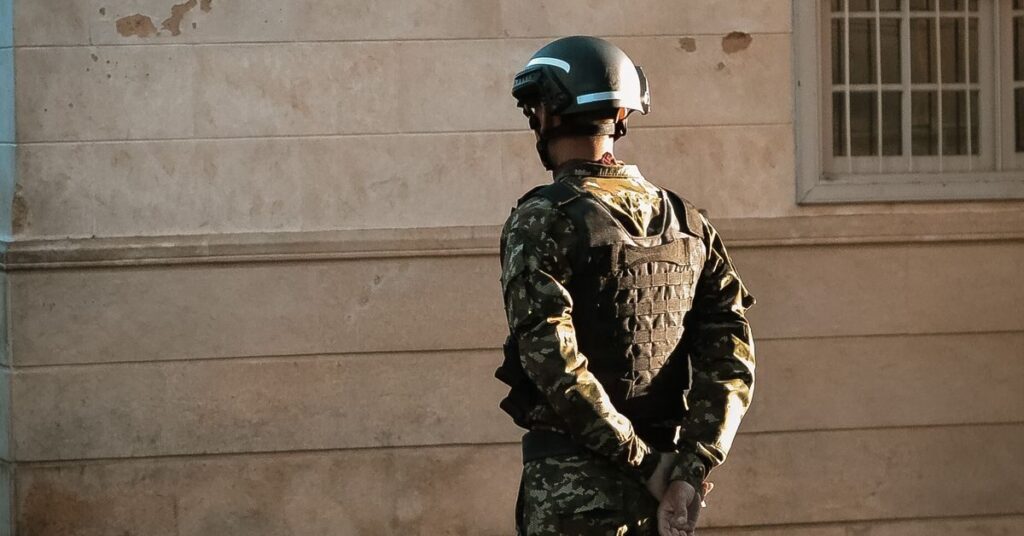
What is a coup? A coup, short for coup d’état, is a sudden, illegal attempt by the military or other insiders in the state to remove the sitting government and take control. The key features are speed, secrecy and the use or threat of force by people who already hold power inside the system. A crowd on the street, however large, does not make a coup. A general with troops and a plan can.
Asking what is a coup sounds simple, but the word comes up often in headlines and is used loosely. Politicians call rivals’ moves “coups” to discredit them, while real seizures of power get softer labels such as “transitions”. This guide gives the working definition used by researchers, explains the main types, walks through well-documented historical cases and shows what the data says about why coups succeed or fail.
Key takeaways
- Researchers answer “what is a coup?” with an illegal and overt attempt by military or other elites within the state to unseat the sitting executive. That is the definition used by the widely cited Powell and Thyne dataset.
- Researchers usually count a coup as successful if the plotters hold power for at least seven days.
- There were 457 coup attempts between 1950 and 2010, and roughly half succeeded. Since 2020, Africa has seen 11 successful military takeovers.
- Coups differ from revolutions (mass movements), civil wars (armed conflict between groups) and impeachments (lawful removal).
- Poverty, a recent coup in the past, insecurity and disputed elections are the strongest warning signs.
What is a coup d’état? The definition researchers use
Political scientists need a definition they can count with. The most widely used comes from Jonathan Powell and Clayton Thyne, who define coups as “illegal and overt attempts by the military or other elites within the state apparatus to unseat the sitting executive.” Each word does work.
- Illegal: the action breaks the country’s own constitution or laws. This is why a lawful vote of no confidence is not a coup.
- Overt: the attempt is visible. Quiet pressure on a president to resign is not counted.
- Military or other elites within the state: the plotters come from the armed forces, security services, or the government itself. Outside rebels or protesters do not qualify.
- Sitting executive: the target is the head of government or state, not a minister or a policy.
The dataset also treats a coup as a success when the perpetrators, or their agents, control power for at least seven days. A seizure reversed in a day or two is recorded as a failed attempt. Researchers admit the line is a judgement call, and a 2023 academic study warned that coup datasets lean on international news and can miss events in less-covered countries.
Types of coups: military, palace, self-coup and more
In practice, what is a coup? It is a short, sharp seizure of the state’s key levers, usually the capital, the broadcaster and the leader. Not every coup looks like tanks in the capital. Scholars separate several forms, which differ in who acts and who loses.
| Type | Who acts | What happens | Example |
|---|---|---|---|
| Military coup | Armed forces or a faction of them | Troops seize the capital, state media and the leader | Chile, 1973; Myanmar, 2021 |
| Palace coup | Insiders such as ministers, relatives or guards | The ruler is replaced by another member of the elite, often with little street action | Many monarchies and one-party states |
| Self-coup (autogolpe) | The elected leader themself | The leader dissolves parliament or courts, or suspends the constitution, to keep power | Peru, 1992 (Alberto Fujimori) |
| Counter-coup | Rivals of earlier plotters | A new group removes the coup leaders | Burkina Faso, 2022 (a second coup in eight months) |
| Failed or foiled coup | Plotters who do not hold power | Loyal forces or public opposition defeat the attempt | Turkey, 2016; Benin, December 2025 |
| Bloodless coup | Usually the military | Power changes hands with little or no fighting | Thailand, 2014; Zimbabwe, 2017 |
A sixth label, the “constitutional” or “judicial” coup, is more contested. People use it to describe the misuse of legal tools, such as courts or emergency powers, to remove a leader. Most academic datasets exclude it because the process stays inside the formal rules. If you read the term in the news, check who is using it and why.
Famous coup examples in history
Looking at specific cases shows how different the same word can be. These are well documented and widely studied.
| Year | Country | What happened | Outcome |
|---|---|---|---|
| 1953 | Iran | The elected prime minister Mohammad Mossadegh was removed after a covert operation backed by US and UK intelligence | The Shah regained full power |
| 1964 | Brazil | The military ousted President João Goulart | Military rule lasted until 1985 |
| 1973 | Chile | Army commander Augusto Pinochet overthrew President Salvador Allende on 11 September | A dictatorship until 1990 |
| 1991 | Soviet Union | Hardline officials tried to remove Mikhail Gorbachev in August | The coup failed in three days; the USSR dissolved in December |
| 1999 | Pakistan | Army chief Pervez Musharraf took power from Prime Minister Nawaz Sharif | Musharraf ruled until 2008 |
| 2013 | Egypt | The military removed President Mohamed Morsi after mass protests | Abdel Fattah el-Sisi became president in 2014 |
| 2016 | Türkiye | A faction of the army tried to seize power on 15 July | The attempt failed within hours; a wide purge followed |
| 2021 | Myanmar | The military took power on 1 February after a disputed election | Armed conflict and military rule continue |
| 2023 | Niger and Gabon | Soldiers detained President Mohamed Bazoum in July and President Ali Bongo in August | Military-led governments took over |
The Egyptian case shows how contested the label can be. Supporters of the 2013 removal called it a popular revolution backed by the army, while critics called it a plain coup. Governments sometimes avoid the word because it can trigger legal limits on foreign aid. That is one reason precise definitions matter.
Why do coups happen?
No single cause explains every coup, but researchers keep finding the same pattern of risk factors. Low income is the strongest. Countries with weak institutions, little tax capacity and frequent crises offer plotters both motive and opportunity.
The coup trap
Past coups predict future coups. Scholar analysis of recent African cases found that seven of the nine countries with successful coups since 2020 had already suffered a successful one in the previous 20 years. Poverty and instability feed each other: soldiers seize power citing failure, then governing by force deepens the weakness that invited the coup.
Other triggers
- Insecurity: in the Sahel, armies losing battles against insurgents blamed civilian leaders. Mali, Burkina Faso and Niger all saw takeovers after security setbacks.
- Disputed elections or term-limit fights: Guinea-Bissau’s army seized power on 26 November 2025, the day before results were due.
- Public frustration: protests over cost of living or corruption can give the military a claim to act, as in Madagascar in October 2025.
- Contagion: successful coups next door make plotters think the risks are lower, and weaken regional norms against them.
Since 2020, 11 coups have succeeded in Africa, in Mali (twice), Burkina Faso (twice), Guinea, Chad, Sudan, Niger, Gabon, Madagascar and Guinea-Bissau, according to analysts tracking the list. Nearly three-quarters of attempts worldwide in that period took place in West Africa or the Sahel. Even so, coups are not an African problem alone. Myanmar (2021) and Thailand (2014) show that the pattern spans regions.
How do countries and organisations respond to a coup?
Responses are uneven, but they follow recognisable rules.
- Regional bodies such as the African Union and ECOWAS suspend members, impose sanctions or, in rare cases, threaten force. The African Union currently keeps several states under suspension.
- Donors and major powers often freeze aid. Under US law, certain assistance must stop to a government that came to power by a military coup. The European Union also suspended budget support to Niger after the 2023 takeover.
- The UN condemns coups in resolutions and statements, yet the Security Council rarely agrees on action because permanent members have differing interests.
- Courts may later prosecute plotters under domestic law, as Türkiye did after 2016.
Sanctions have a mixed record. They can pressure leaders to set election dates, but they can also hurt ordinary people and push juntas toward other partners. As a result, many coup governments still survive for years.
What is a coup compared with a revolution or civil war?
| Event | Who drives it | Method | Aim |
|---|---|---|---|
| Coup | Military or state insiders | Sudden seizure of key institutions | Replace the leader, often keep the system |
| Revolution | Mass popular movement | Protest, strikes, sometimes armed struggle | Transform the political or social order |
| Civil war | Organised armed groups against the state or each other | Prolonged fighting | Control territory or the state |
| Impeachment | Legislature and courts | Lawful procedure under the constitution | Remove an official within the rules |
| Insurgency | Non-state armed group | Guerrilla or terror tactics | Weaken or capture the state |
Events can blur these boundaries. A coup may follow a revolution, a protest wave may push the army to act, and an unsuccessful coup can trigger a civil war. Even so, the underlying test stays the same: who acts, and do they break the rules to do it?
Frequently asked questions about coups
What is a coup in simple words?
A coup is a sudden, illegal takeover of government by the military or other insiders. They remove the leader by force or the threat of force, and then claim control of the state.
What is the difference between a coup and a revolution?
A coup is carried out by a small group inside the state, usually the army. A revolution is a mass movement that aims to change the political or social system.
How many coups have there been?
The Powell and Thyne dataset records 457 attempts from 1950 to 2010, with about half successful. Africa has had 11 successful military takeovers since 2020.
What is a self-coup?
A self-coup happens when an elected leader uses illegal means to keep or expand power, for example by shutting down parliament. Peru in 1992 is the textbook case.
Is a coup always violent?
No. Many coups are bloodless, such as Thailand in 2014. Even so, the threat of force is what makes them work, and violence often follows later.
Is a coup legal under international law?
A coup breaks domestic law by definition. International law does not ban coups directly, but regional charters, such as the African Union’s, forbid unconstitutional changes of government.
Which countries have had the most coups?
Since 1950, Bolivia, Sudan, Thailand and several West African states rank among the highest, partly because one coup tends to cause the next.
What is a coup? The practical test
Understanding what is a coup helps you judge the claims around any new event. Ask four questions: who acted, was it illegal under national law, did the plotters hold power beyond a week, and what do regional bodies call it? The answers usually separate a genuine coup from a political fight over legitimacy.
For more concepts like this, see the Geopolitics Concepts section and the world affairs glossary. To place the countries mentioned here on a map, try the world capitals quiz. Our homepage links to every explainer.