- Home
- International Organizations
- What Is the Commonwealth of Nations?…
What Is the Commonwealth of Nations? Members, History and Purpose
What is the Commonwealth of Nations? It is a voluntary association of 56 independent countries, mostly former British territories, that cooperate on trade, democracy and development. King Charles III is its symbolic head, and leaders meet every two years at CHOGM. It has no power to pass binding laws.
By World News Reddit Editorial Team7 min readSources named
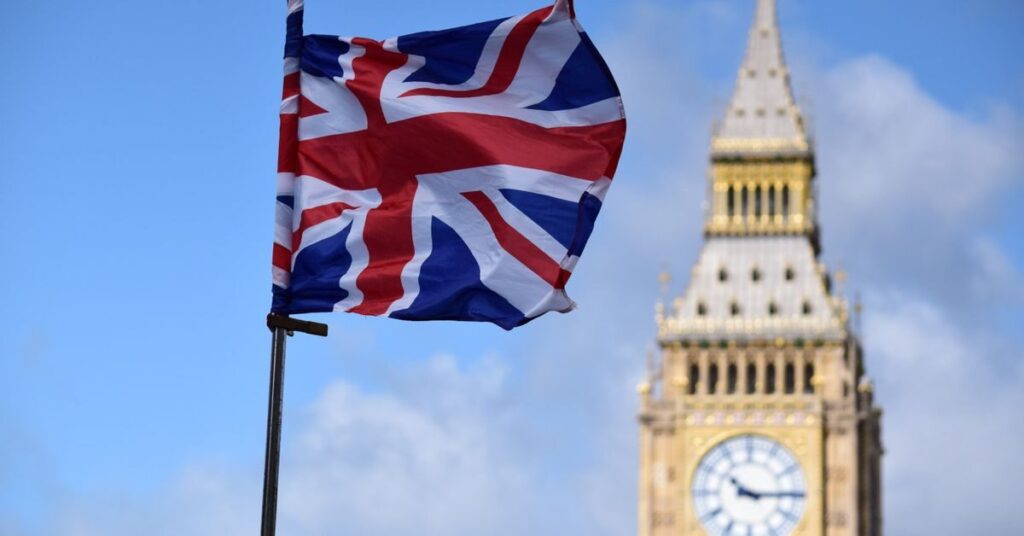
What is the Commonwealth of Nations? It is a voluntary association of 56 independent countries, most of them former territories of the British Empire. Members work together on trade, democracy, development and culture. About 2.7 billion people live in Commonwealth countries, roughly a third of humanity. King Charles III is its symbolic Head.
Many people ask what is the Commonwealth of Nations because the Commonwealth often confuses readers. It is not an empire, it has no army and it cannot pass binding laws. It is a club with shared values, a small secretariat in London and a summit every two years. Antigua and Barbuda hosted the 2026 summit in early November. This guide explains what the Commonwealth is and lists all 56 members. It also sets out how it works, what it does and how it differs from similar groups.
Key takeaways
- The Commonwealth has 56 members across Africa, Asia, the Caribbean and the Americas, Europe and the Pacific.
- It grew out of the British Empire, but membership is voluntary and members are equal. Gabon and Togo, which joined in 2022, were never British colonies.
- King Charles III is Head of the Commonwealth, a symbolic role that is not hereditary. Shirley Botchwey of Ghana is Secretary-General.
- Leaders meet every two years at CHOGM, the Commonwealth Heads of Government Meeting. Antigua and Barbuda hosted the 2026 meeting.
- It is guided by the Commonwealth Charter, which commits members to democracy, human rights and the rule of law.
What is the Commonwealth of Nations? A short definition
The Commonwealth is an intergovernmental organisation. Its members choose to belong, they pay modest contributions and they agree to a set of shared principles. Members decide by consensus. No member can be outvoted, but the group can struggle to act when members disagree.
Because it has no treaty and no binding law, the Commonwealth works through influence. The Secretariat offers technical help to governments, observes elections, supports small states in trade talks and runs programmes in areas such as climate resilience, youth and the law. Its combined GDP is projected to reach about US$19.5 trillion by 2027.
What is the Commonwealth of Nations’ history? A brief account
The idea took shape as Britain’s dominions gained self-rule. In 1926, the Balfour Declaration described Britain and the dominions as equal in status, and the Statute of Westminster in 1931 turned that into law. Today’s Commonwealth dates from the London Declaration of 1949, which allowed India to remain a member as a republic that did not recognise the Crown as head of state. Britain’s name was dropped from the title, and a wave of decolonisation in Africa, Asia and the Caribbean swelled the membership over the next decades.
Membership has also shifted at the edges. Ireland left in 1949, South Africa left in 1961 over apartheid and rejoined in 1994, and Pakistan left in 1972 and returned in 1989. Zimbabwe withdrew in 2003. The Gambia left in 2013 and rejoined in 2018, and the Maldives left in 2016 and rejoined in 2020. Rwanda joined in 2009 and Mozambique in 1995, though neither had colonial ties to Britain. Gabon and Togo became the 55th and 56th members at the Kigali summit in June 2022.
Commonwealth countries: the full list of 56 members
| Region (number of members) | Members |
|---|---|
| Africa (21) | Botswana, Cameroon, Eswatini, Gabon, Gambia, Ghana, Kenya, Lesotho, Malawi, Mauritius, Mozambique, Namibia, Nigeria, Rwanda, Seychelles, Sierra Leone, South Africa, Tanzania, Togo, Uganda, Zambia |
| Asia (8) | Bangladesh, Brunei, India, Malaysia, Maldives, Pakistan, Singapore, Sri Lanka |
| Caribbean and the Americas (13) | Antigua and Barbuda, Bahamas, Barbados, Belize, Canada, Dominica, Grenada, Guyana, Jamaica, Saint Kitts and Nevis, Saint Lucia, Saint Vincent and the Grenadines, Trinidad and Tobago |
| Europe (3) | Cyprus, Malta, United Kingdom |
| Pacific (11) | Australia, Fiji, Kiribati, Nauru, New Zealand, Papua New Guinea, Samoa, Solomon Islands, Tonga, Tuvalu, Vanuatu |
Check the Commonwealth Secretariat for any change, because summits and the Secretariat announce admissions and withdrawals. Thirty-three of the 56 members are small states, many of them islands, and the Commonwealth often acts as their voice on climate and trade. You can learn their capitals with our world capitals quiz.
Heads of state: realms, republics and monarchies
| Category | Number | Description | Examples |
|---|---|---|---|
| Commonwealth realms | 15 | Independent countries where King Charles III is also head of state | United Kingdom, Canada, Australia, New Zealand, Jamaica |
| Republics | 36 | Countries with their own president or equivalent head of state | India, Nigeria, South Africa, Barbados (since 2021) |
| Other monarchies | 5 | Countries with their own royal families | Brunei, Eswatini, Lesotho, Malaysia, Tonga |
In other words, being a member does not mean accepting the British Crown. Most Commonwealth countries are republics, and member governments choose the Head of the Commonwealth rather than inheriting it. Leaders agreed in 2018 that King Charles would succeed Queen Elizabeth II in the role.
How does the Commonwealth work?
| Body | What it does |
|---|---|
| Head of the Commonwealth | A symbolic figurehead; King Charles III holds the role |
| CHOGM (Commonwealth Heads of Government Meeting) | The leaders’ summit, held every two years in a member country. It sets priorities and approves new members. |
| Chair-in-Office | The leader of the host country, who holds the role until the next summit. Gaston Browne of Antigua and Barbuda chairs after 2026. |
| Commonwealth Secretariat | The central organisation, based at Marlborough House in London, that supports members. Its Secretary-General is Shirley Botchwey. |
| Ministerial meetings and networks | Gatherings of ministers for trade, health, education, law and finance, plus accredited civil-society groups |
CHOGM works as the group’s high point. The 2022 meeting took place in Kigali and the 2024 meeting in Samoa, the first hosted by a Pacific small island state. The 2026 meeting ran from 1 to 4 November in St John’s, Antigua and Barbuda. Its theme was “Accelerating Partnerships and Investment for a Prosperous Commonwealth”, and the leaders’ sessions took place on 3 and 4 November.
What does the Commonwealth do?
- Democracy and rule of law: the Commonwealth Charter sets principles, and the Commonwealth Ministerial Action Group can recommend suspending a member that seriously breaches them. Fiji, for example, was suspended in 2009 and reinstated in 2014.
- Trade and investment: members often trade more easily with each other because of shared legal traditions and English-language business practice. The Secretariat has projected that trade among members could reach about US$2 trillion by 2030.
- Small-state support: the Secretariat helps small and vulnerable states negotiate on climate finance, ocean policy and debt.
- Culture and sport: the Commonwealth Games, held every four years, bring together athletes from across the network. Glasgow hosted the 2026 Games, and the 2030 centenary edition is planned for Ahmedabad in India.
- Education and youth: scholarships and youth programmes build links between countries.
Commonwealth vs European Union vs other groups
| Feature | Commonwealth of Nations | European Union | United Nations |
|---|---|---|---|
| Members | 56 | 27 | 193 |
| Legal power | No binding laws; consensus | Binding law in many areas | Security Council can bind members; General Assembly cannot |
| Core tie | Shared history, language and values | Treaties and a single market | Global charter for peace and cooperation |
| Budget | Small; voluntary contributions | Large; own budget | Assessed contributions from members |
| Leaving | Easy; members can withdraw | Allowed under Article 50 | Rare |
The comparison explains the Commonwealth’s appeal and its limits. It is flexible and inclusive, but it lacks the legal force of the European Union. That is why its work depends on goodwill and on members choosing to take part.
Frequently asked questions about the Commonwealth of Nations
What is the Commonwealth of Nations in simple words?
It is a voluntary club of 56 independent countries, mostly former British territories, that cooperate on trade, democracy, development and culture. It has no power to pass binding laws.
How many countries are in the Commonwealth?
There are 56 member countries. Gabon and Togo were the most recent to join, in June 2022.
Is the Commonwealth the same as the British Empire?
No. The empire was a system of colonial rule. The Commonwealth is a voluntary association of equal, independent states that replaced it after decolonisation.
Who is the head of the Commonwealth?
King Charles III is Head of the Commonwealth. The role is symbolic, and member governments agreed that he would succeed his mother. It is not automatically hereditary.
Can any country join the Commonwealth?
A country applies, shows that it accepts the Commonwealth Charter and needs the agreement of existing members. Since 2007 a historic tie to Britain has no longer been required, and Rwanda, Gabon and Togo had none.
Is the United States in the Commonwealth?
No. The United States was never a Commonwealth member. Canada, Australia and New Zealand are members.
Why do some Commonwealth countries have the King as head of state?
Fifteen countries, called Commonwealth realms, chose to keep the monarch as head of state. They are fully independent and have their own governments and laws.
So what is the Commonwealth of Nations today?
The short answer to what is the Commonwealth of Nations is a flexible club of equals. Understanding that helps cut through some common myths. It is not an empire and not a legal union. It is a flexible network that gives small and mid-sized states a seat at global tables, even if its influence is mostly soft.
Its future will depend on how it uses its size, its youthful population and its trade potential. For more guides on global groups, read the International Organizations section. Test your map skills with our countries quiz, see why New Zealand reached 11th place in the happiest countries ranking, and return to the homepage for more.