- Home
- Countries & Rankings
- Countries in South America: Full List…
Countries in South America: Full List With Capitals
Countries in South America number 12 sovereign states: Argentina, Bolivia, Brazil, Chile, Colombia, Ecuador, Guyana, Paraguay, Peru, Suriname, Uruguay and Venezuela. French Guiana and the Falkland Islands are territories, not countries. This guide lists every capital, the territories and the key facts.
By World News Reddit Editorial Team7 min readSources named
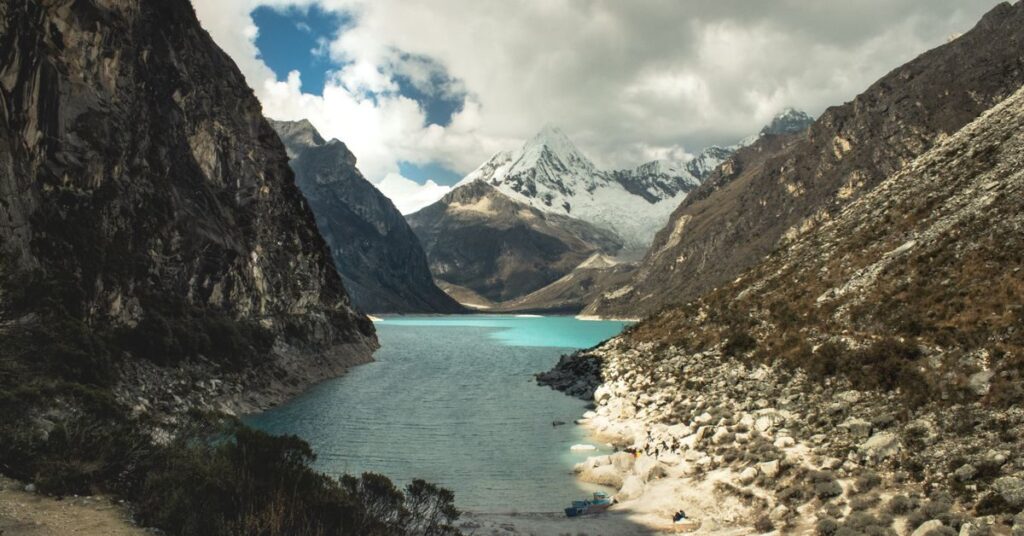
Countries in South America: the continent has 12 sovereign countries. They are Argentina, Bolivia, Brazil, Chile, Colombia, Ecuador, Guyana, Paraguay, Peru, Suriname, Uruguay and Venezuela. French Guiana and the Falkland Islands are also on the continent, but they are territories, not independent states.
Lists online often disagree, so this guide shows exactly how the count works. You get every country with its capital, a note on the three territories, and a few facts that explain why the region matters. Where a capital has two answers, as in Bolivia, we say so plainly.
Key takeaways
- There are 12 sovereign countries in South America, and all 12 are members of the United Nations.
- There are 3 non-sovereign territories: French Guiana (France), the Falkland Islands and South Georgia and the South Sandwich Islands (both United Kingdom).
- Brazil is the largest country by area and population, and it is the only one that speaks Portuguese.
- Bolivia and Paraguay are the two landlocked countries. Chile is the long, thin country on the Pacific coast.
- Bolivia has two capitals in practice. Sucre is the constitutional capital and La Paz is the seat of government.
Full list of countries in South America with capitals
The table below lists all 12 countries in alphabetical order. The capitals are the ones governments themselves recognise. Ecuador, for instance, uses the US dollar as its currency, while Brazil and Chile keep their own.
| Country | Capital | Main language | Coastline |
|---|---|---|---|
| Argentina | Buenos Aires | Spanish | Atlantic |
| Bolivia | Sucre (constitutional); La Paz (seat of government) | Spanish and 36 recognised indigenous languages | Landlocked |
| Brazil | Brasília | Portuguese | Atlantic |
| Chile | Santiago | Spanish | Pacific |
| Colombia | Bogotá | Spanish | Atlantic (Caribbean) and Pacific |
| Ecuador | Quito | Spanish | Pacific |
| Guyana | Georgetown | English | Atlantic |
| Paraguay | Asunción | Spanish and Guaraní | Landlocked |
| Peru | Lima | Spanish, Quechua and Aymara | Pacific |
| Suriname | Paramaribo | Dutch | Atlantic |
| Uruguay | Montevideo | Spanish | Atlantic |
| Venezuela | Caracas | Spanish | Atlantic (Caribbean) |
Want to test yourself afterwards? Try our world capitals quiz or the countries quiz.
How many countries are in South America?
The short answer is 12. A sovereign country governs itself, controls its borders and wins recognition from other states. Every one of the 12 is a UN member. The confusion comes from the places that sit on the continent but belong to someone else.
Territories that are not countries
| Territory | Controlled by | Capital | Status |
|---|---|---|---|
| French Guiana | France | Cayenne | Overseas department and region of France, part of the European Union |
| Falkland Islands | United Kingdom | Stanley | British overseas territory, claimed by Argentina |
| South Georgia and the South Sandwich Islands | United Kingdom | King Edward Point | British overseas territory, claimed by Argentina |
French Guiana is the only part of South America inside the European Union. It uses the euro and sends representatives to the French parliament. Argentina claims the Falklands and calls them Islas Malvinas. The two countries fought a war over them in 1982. The islanders voted by a large majority to remain British in a 2013 referendum.
Panama is sometimes added to the list. Most atlases place it in North America or Central America, so we leave it out. Our guide to Central America will cover it.
Biggest and smallest countries in South America
Size varies enormously. Brazil covers about 8.5 million square kilometres, which is nearly half of the whole continent. It is also home to more than 210 million people, again roughly half of South America. Suriname is the smallest country by area and by population.
| Rank (area) | Country | Approx. area (million km²) | Note |
|---|---|---|---|
| 1 | Brazil | 8.5 | Fifth largest country in the world |
| 2 | Argentina | 2.8 | Second largest in South America |
| 3 | Peru | 1.3 | Home to the Andes and part of the Amazon |
| 4 | Colombia | 1.1 | Only country with both Caribbean and Pacific coasts |
| 5 | Bolivia | 1.1 | Landlocked, with a high-altitude plateau |
| 12 | Suriname | 0.16 | Smallest country by area and population |
By population, the order is slightly different. Brazil is first, followed by Colombia, Argentina, Peru and Venezuela. Uruguay is small but has a high income level, while Guyana and Suriname have the lowest population density.
Geography: Andes, Amazon and the southern tip
Three features shape the continent. The first is the Andes, the longest mountain range on land, which runs down the entire western side. It passes through seven countries, from Venezuela to Chile and Argentina.
The second is the Amazon basin. Rainforest covers large parts of Brazil, Peru, Colombia and several neighbours, and the Amazon River carries more water than any other river on Earth.
Then comes the far south. Patagonia, shared by Argentina and Chile, ends at Tierra del Fuego. Chile alone stretches roughly 4,300 kilometres from north to south yet averages less than 200 kilometres wide.
Languages, trade blocs and why the region matters
Spanish is the main language of nine countries. Portuguese dominates Brazil, English is official in Guyana and Dutch in Suriname. French is spoken in French Guiana. Many people also speak indigenous languages such as Quechua, Aymara and Guaraní, and Paraguay is unusual because most of its people speak Guaraní too.
The continent also works together in blocs. Mercosur links Argentina, Brazil, Paraguay and Uruguay in a customs union. The Andean Community brings together Bolivia, Colombia, Ecuador and Peru. Both mirror ideas used in the European Union, though with far less pooled power.
Economically, the region exports food, metals and energy. It holds a large share of the world’s lithium, copper and soybeans. That makes it central to debates about trade surpluses and deficits, which our guide on a trade deficit explains.
How the countries in South America became independent
Almost all the countries in South America were colonies. Spain ruled most of the west and centre, while Portugal held Brazil. Independence wars swept the region in the early nineteenth century, led by figures such as Simón Bolívar in the north and José de San Martín in the south.
| Country | Independence (approximate) | Former ruler |
|---|---|---|
| Venezuela | 1811 | Spain |
| Paraguay | 1811 | Spain |
| Argentina | 1816 | Spain |
| Chile | 1818 | Spain |
| Peru | 1821 | Spain |
| Ecuador | 1822 | Spain |
| Brazil | 1822 | Portugal |
| Bolivia | 1825 | Spain |
| Uruguay | 1825 | Brazil and Spain |
| Colombia | 1810 | Spain |
| Guyana | 1966 | United Kingdom |
| Suriname | 1975 | Netherlands |
Dates differ by source, because many countries declared independence first and won it later. Colombia declared independence in 1810 and secured it by 1819. Guyana and Suriname are far younger. They became independent in the twentieth century, which is why their languages and cultures differ from their Spanish-speaking neighbours.
How to remember the countries in South America
- Group them by coast. Pacific: Colombia, Ecuador, Peru and Chile. Atlantic: Venezuela, Guyana, Suriname, Brazil, Uruguay and Argentina.
- Learn the two landlocked states first. Bolivia and Paraguay sit in the middle with no sea coast.
- Spot the Guianas. Guyana, Suriname and French Guiana form a block on the north-east coast.
- Use the Andes as a spine. Seven countries touch the mountains, from Venezuela in the north to Chile and Argentina in the south.
Practice helps. Our geography quizzes and flag quiz make it easier to recall every capital and flag.
Frequently asked questions about countries in South America
How many countries are in South America?
There are 12 sovereign countries in South America: Argentina, Bolivia, Brazil, Chile, Colombia, Ecuador, Guyana, Paraguay, Peru, Suriname, Uruguay and Venezuela. French Guiana, the Falkland Islands and South Georgia are territories.
Is French Guiana a country?
No. French Guiana is an overseas department and region of France. Its people are French citizens, it uses the euro and it forms part of the European Union.
Which South American countries are landlocked?
Two are landlocked: Bolivia and Paraguay. All the others have at least one ocean or sea coastline.
What is the largest country in South America?
Brazil is the largest by both area and population. It covers about 8.5 million square kilometres and has more than 210 million people.
What is the capital of Bolivia?
Bolivia has two capitals in practice. Sucre is the constitutional capital, and La Paz is the seat of government where the president and legislature work.
Is Mexico in South America?
No. Mexico is in North America. Panama is usually placed in North or Central America as well, so neither is counted among the countries in South America.
Are South American countries all Spanish-speaking?
No. Spanish is the most common language, but Brazil speaks Portuguese, Guyana uses English, Suriname uses Dutch and French is spoken in French Guiana.
Countries in South America: the short version
To sum up, countries in South America number 12, plus three territories that belong to France and the United Kingdom. Remember the Bolivia capital quirk, the two landlocked states and Brazil’s outsized share of land and people. Those four points answer most quiz and homework questions.
Keep exploring in the Countries and Rankings section. Compare how these nations score on wellbeing in our guide to the happiest countries in the world, or return to the homepage for more explainers.