- Home
- Global Economy Basics
- What Is a Trade Deficit? Causes,…
What Is a Trade Deficit? Causes, Effects and Examples
What is a trade deficit? A trade deficit occurs when a country imports more goods and services than it exports. The United States ran a $901.5 billion deficit in 2025, with a record goods deficit of $1.24 trillion partly offset by a record services surplus.
By World News Reddit Editorial Team8 min readSources named
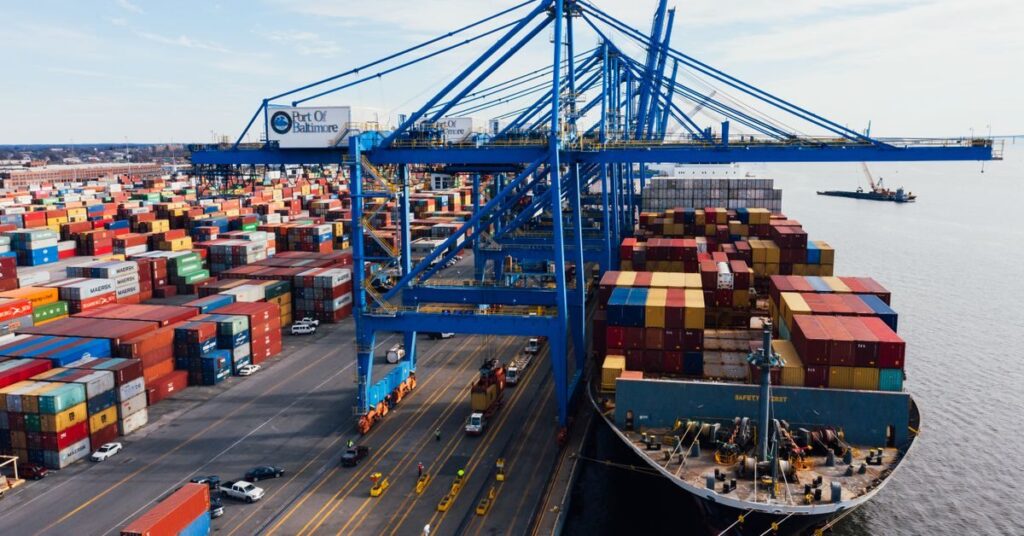
What is a trade deficit? A trade deficit occurs when a country buys more goods and services from the rest of the world than it sells to it. In other words, imports exceed exports over a given period. The gap is the trade balance, and a negative balance is a deficit. The United States, for instance, ran a goods and services deficit of $901.5 billion in 2025.
People ask what is a trade deficit because headlines treat the number as a scorecard, yet economists disagree about whether a deficit is a problem. This guide defines the term and shows how to calculate it. It also explains what causes deficits, what they do to jobs, currencies and debt, and what the latest US data show. It also lays out the strongest arguments on both sides so you can judge for yourself.
Key takeaways
- A trade deficit means imports exceed exports. The formula is exports minus imports, and a negative result is a deficit.
- America’s goods and services deficit was $901.5 billion in 2025, almost unchanged from $903.5 billion in 2024, despite sweeping new tariffs.
- The goods deficit hit a record $1.24 trillion, partly offset by a record $339.5 billion services surplus.
- A deficit reflects saving and investment patterns as much as trade policy. A country that invests more than it saves must borrow abroad.
- Deficits are not automatically harmful. Context, such as growth, currency and what the imports fund, decides whether they are a risk.
What is a trade deficit? Definition and formula
A trade deficit is a negative trade balance. The trade balance equals a country’s exports minus its imports of goods and services. Statisticians measure it over a period, usually a month, a quarter or a year. If a country exports $100 billion and imports $130 billion, it has a deficit of $30 billion. If exports are larger, it has a surplus.
| Situation | Exports vs imports | Trade balance | Example |
|---|---|---|---|
| Trade deficit | Imports exceed exports | Negative | United States, United Kingdom, India |
| Trade surplus | Exports exceed imports | Positive | Germany, many oil producers |
| Balanced trade | Roughly equal | Near zero | Rare in practice |
Goods, services and the current account
In plain terms, what is a trade deficit? It is a gap between what a country buys abroad and what it sells abroad.
Statisticians split trade into goods (physical items such as cars and soybeans) and services (tourism, finance, software and education). A country can run a deficit in one and a surplus in the other. The United States is a good example, as the next section shows.
Note that the trade balance is not the same as the current account. Meanwhile, the current account adds income from investments abroad and transfers such as remittances. Even so, trade is the largest piece, so people often use the terms loosely.
What is a trade deficit in the US? The latest data
The US Census Bureau and Bureau of Economic Analysis publish figures monthly. For the full year 2025, they reported a goods and services deficit of $901.5 billion. That was $2.1 billion lower than the $903.5 billion recorded in 2024, a fall of 0.2%. It remains one of the largest on record since statistics began in 1960.
| Year | Deficit | Note |
|---|---|---|
| 2015 | $491 billion | Lower base year |
| 2020 | $646 billion | Pandemic year |
| 2021 | $837 billion | Demand rebound |
| 2022 | $923.7 billion | Record high so far |
| 2023 | $774 billion | Imports fell as demand cooled |
| 2024 | $903.5 billion | Strong imports and early stockpiling |
| 2025 | $901.5 billion | Goods deficit at a record; services surplus at a record |
Inside the 2025 total
Look inside the 2025 total and the story is more nuanced. Exports of goods and services rose 6.2% to a record $3.43 trillion, while imports rose about 5% to a record $4.33 trillion. The goods deficit reached a record $1.24 trillion, but the services surplus also reached a record $339.5 billion, which narrowed the overall gap. The United States has run a goods deficit every year since 1975.
| Measure | Value | Direction |
|---|---|---|
| Exports of goods and services | $3.43 trillion | Record high |
| Imports of goods and services | $4.33 trillion | Record high |
| Goods deficit | $1.24 trillion | Record high |
| Services surplus | $339.5 billion | Record high |
| US exports to China | $106.3 billion | Down about 25% from $143.2 billion in 2024 |
| US goods deficit with India | $58.2 billion | Large and growing bilateral gap |
Tariffs did not close the gap in 2025. Importers rushed to buy ahead of tariff increases early in the year, and purchases shifted toward other trading partners. The deficit with China narrowed, with US imports from China falling about 30%, but it widened with other partners. This is a good reminder that a bilateral deficit is not the same as the overall deficit.
What causes a trade deficit?
Several forces work together. The most useful way to think about it is that the trade balance mirrors a country’s savings and investment.
- A savings gap. If a country invests and spends more than it saves, the gap is filled by foreign money. That inflow of capital must be matched by an excess of imports over exports. Large government budget deficits can widen the gap.
- A strong currency. A high exchange rate makes imports cheaper and exports dearer, which pushes the balance toward deficit. The US dollar’s role as the main reserve currency keeps demand for it high.
- Strong domestic demand. Rich consumers buy a lot, including imported goods. Faster growth than your trading partners often means imports rise faster than exports.
- Comparative advantage and supply chains. Firms locate production where it is cheapest, so many goods are assembled abroad and counted as imports.
- Energy and commodity prices. Importers of oil see deficits widen when prices spike, while exporters gain.
Why the deficit matters less than the debate suggests
Before weighing the arguments, note that deficits move with the business cycle and the exchange rate, so one year’s figure says little on its own.
Is a trade deficit bad? Arguments for and against
Economists disagree, and the answer depends on what the deficit finances and how the country pays for it.
| Concern (why it can be bad) | Counterpoint (why it can be fine) |
|---|---|
| It can cost manufacturing jobs when imports replace domestic output. | Cheaper imports lower prices for households and inputs for firms, and export jobs also grow. |
| A country must borrow from or sell assets to foreigners to pay for it. | Foreign investment can fund productive projects, such as factories and technology. |
| It can leave a country exposed if foreign lenders pull back suddenly. | Countries that borrow in their own currency, like the United States, face lower rollover risk. |
| It may signal a loss of competitiveness. | Fast-growing economies often run deficits while they invest heavily. |
The right reading is conditional. A deficit funding investment in a growing economy is a different story from one funding consumption in a country with weak finances. Surpluses are not automatically good either. A large surplus can reflect weak domestic demand.
How can a country reduce a trade deficit?
- Raise national saving through lower government deficits or more private saving.
- Boost exports with trade deals, export finance and competitive industries.
- Adjust the exchange rate, since a weaker currency makes exports cheaper. This is mostly a market outcome.
- Use tariffs or quotas, though they raise costs for domestic buyers, invite retaliation and, as 2025 showed, may not shrink the overall gap.
- Build domestic supply in strategic sectors, a slower route that needs sustained investment.
Tariffs deserve a caution. Economic theory and experience suggest they can reduce imports of targeted goods. Their effect on the overall balance is limited, because currencies, other trade flows and national savings adjust. See our guide on embargoes for a stronger form of trade restriction.
Frequently asked questions about trade deficits
What is a trade deficit in simple terms?
A trade deficit happens when a country imports more goods and services than it exports. The shortfall is the difference between the two values over a period.
How do you calculate a trade deficit?
Subtract the value of imports from the value of exports. If the answer is negative, the country has a trade deficit. For example, $100 billion of exports minus $130 billion of imports gives a deficit of $30 billion.
What was the US trade deficit in 2025?
The US goods and services trade deficit was $901.5 billion in 2025, compared with $903.5 billion in 2024. The goods deficit alone was a record $1.24 trillion.
Is a trade deficit bad for the economy?
Not always. A deficit can fund investment in a growing economy, but it can also signal overspending and rising foreign debt. Context and the size relative to GDP matter.
What is the difference between a trade deficit and a budget deficit?
A trade deficit measures trade with other countries. A budget deficit is when a government spends more than it collects in revenue. They are linked but not identical.
Which country has the largest trade deficit?
In dollar terms, the United States has the largest, at roughly $900 billion a year. As a share of the economy, smaller countries can have larger deficits.
Do tariffs reduce the trade deficit?
Tariffs can reduce imports of specific goods, but the overall deficit depends on saving, investment and exchange rates. The US deficit barely changed in 2025 despite sweeping tariffs.
What is a trade deficit telling readers?
The short answer to what is a trade deficit is a gap, not a debt. Understanding that helps you test big claims in the news. When someone says a deficit is a loss, ask what it finances. When someone says it has been cut, check whether they mean one country, goods only or the overall balance, because the figures can look very different.
As a rule of thumb, treat a persistent deficit as a symptom of how an economy saves and invests, not as a bill owed to other countries. For more plain-English economics, browse the Global Economy Basics section, read how energy shocks feed stagflation, or see how members of the European Union trade freely inside one market. The homepage lists more guides.